Beyond the Classroom: Grade 11 HL Physics Students Visit CERN
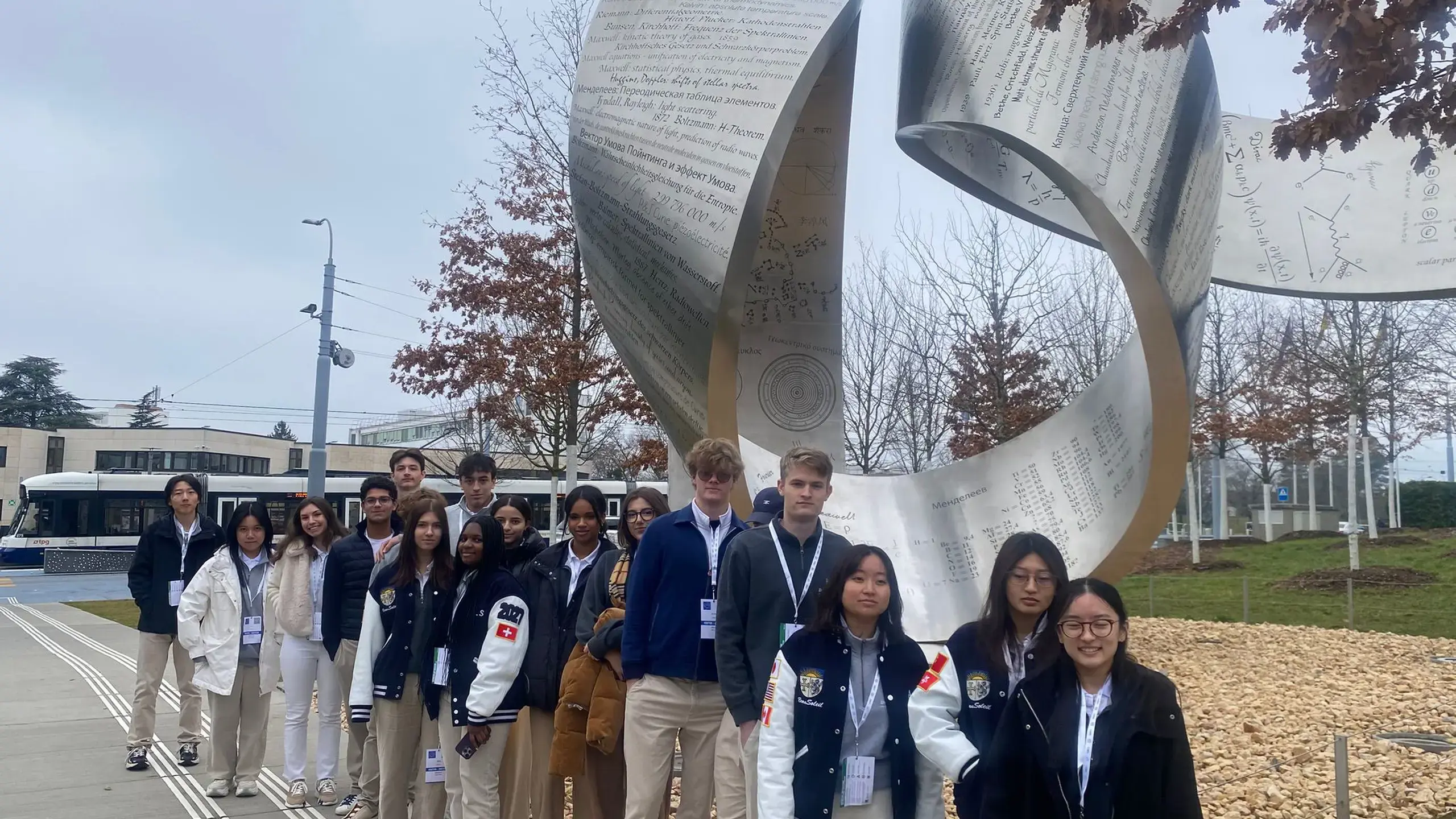
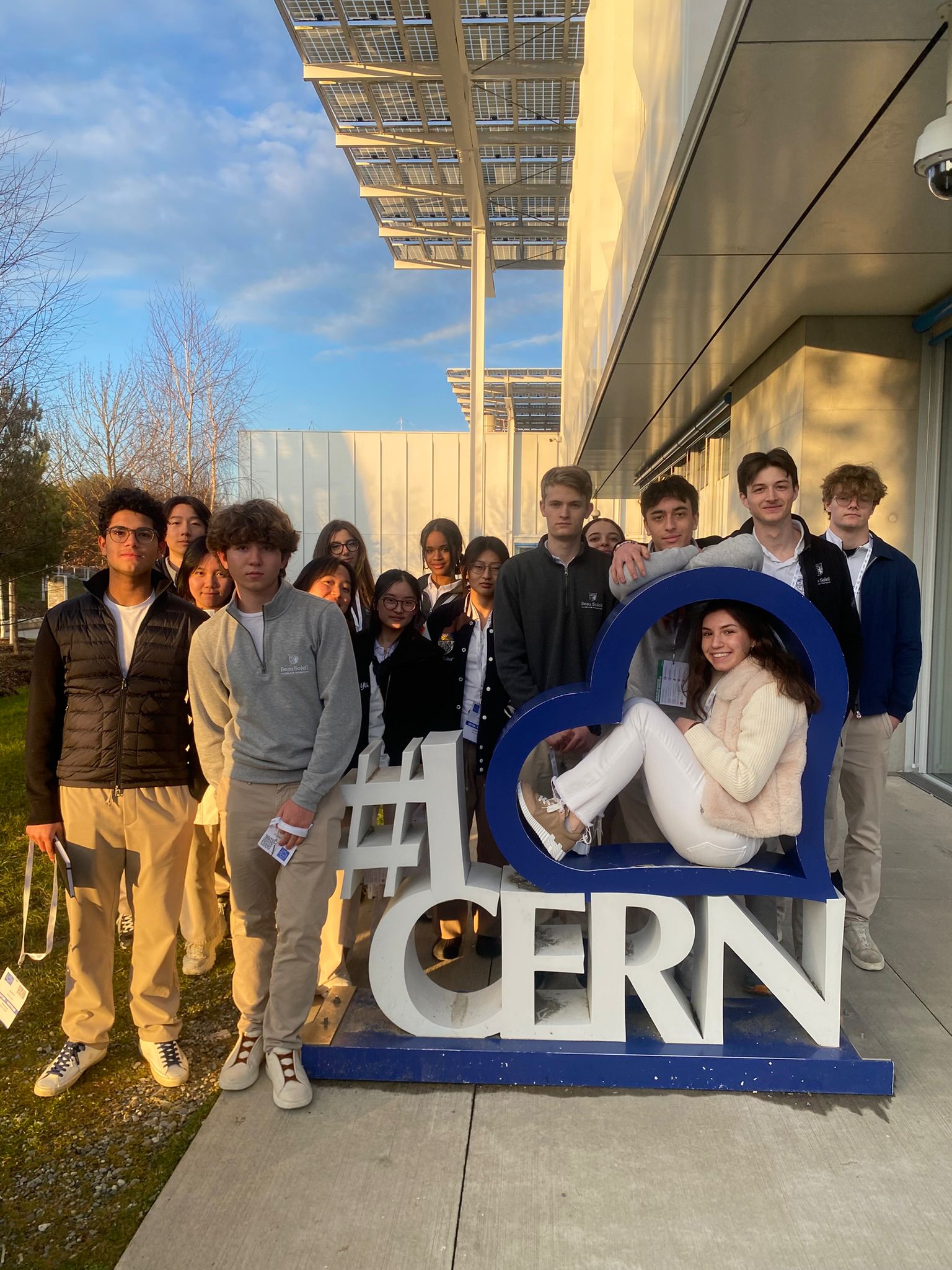
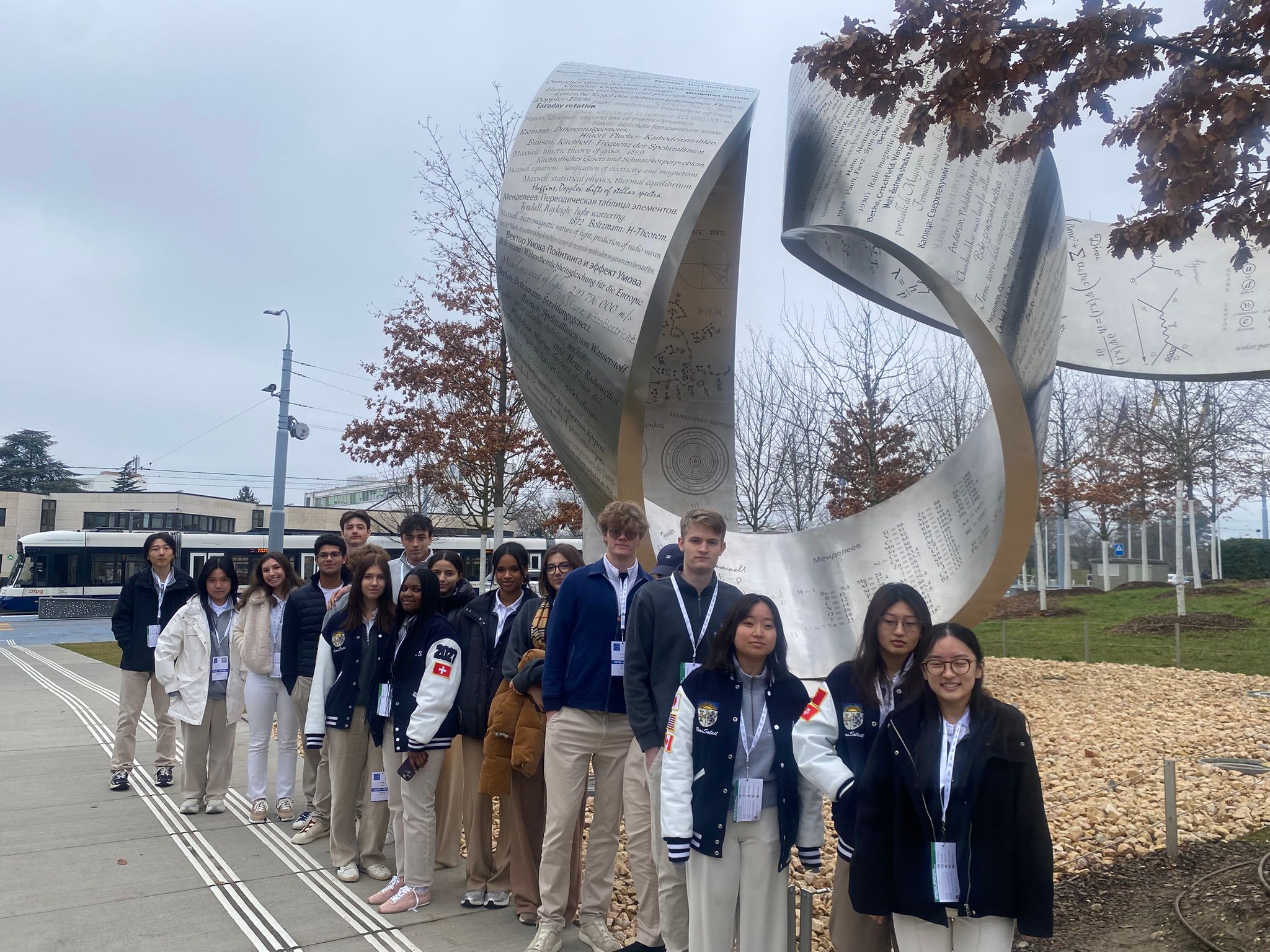
Our Grade 11 Higher Level Physics students recently visited CERN, the European Organization for Nuclear Research, one of the world’s leading centres for particle physics research and scientific collaboration.
This educational trip allowed students to experience cutting-edge research in action while strengthening their understanding of key IB Physics concepts.
Why Visit CERN? Inspiring Future Scientists
The main purpose of the visit was to expand students’ understanding of modern scientific research and inspire them to consider academic and research-based careers. CERN is one of the largest international scientific collaborations in the world, bringing together researchers, engineers and technicians from across the globe.
Seeing this level of cooperation first-hand helped students appreciate how countries work together to advance knowledge and solve complex scientific questions.
As one student shared:
“I didn’t know how many different places the CERN researchers were from. I didn’t know countries could work together to create something so cool.”
Connecting the CERN Visit to the IB HL Physics Curriculum
The trip directly supported the IB Higher Level Physics curriculum at Beau Soleil. In Topic E, students study particle physics and explore how fundamental particles form the building blocks of the universe.
Current neutrino research at CERN links specifically to Topic E5, including the evidence for nuclear fusion in the Sun. Observing real research in this area helped students connect classroom theory to real-world experimentation.
For many students, particle physics can feel abstract. Visiting CERN provided tangible examples of how theoretical physics drives groundbreaking discoveries.
What Did Students See at CERN?
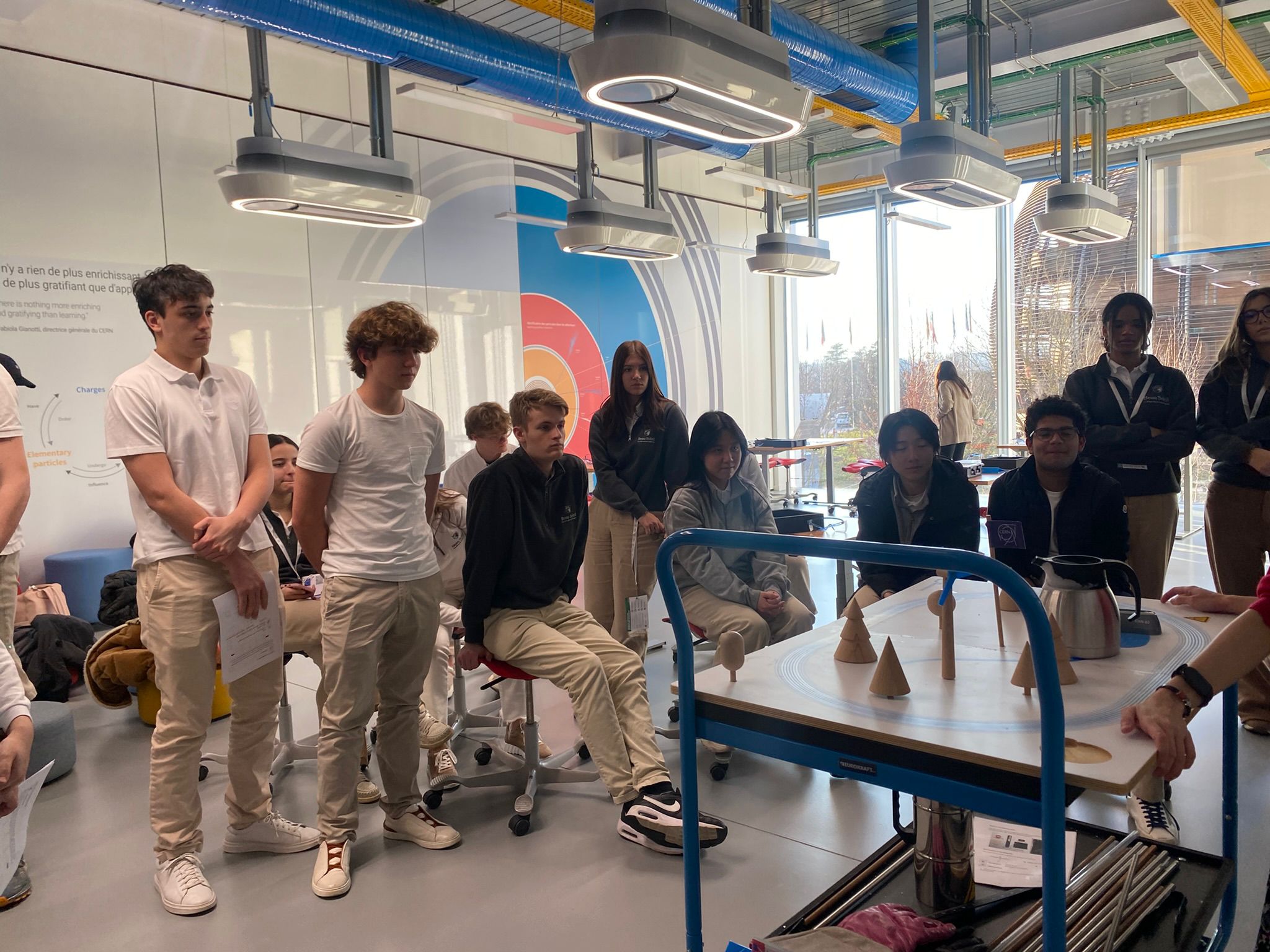
During the visit, students explored several key areas of the CERN facility:
-
Part of the particle accelerator where prototypes are being developed for neutrino detection projects worldwide
-
The superconducting magnet laboratory, where magnets for the accelerator are built and tested
-
Interactive exhibition spaces showcasing CERN’s history and scientific achievements
Students also observed working areas where scientists maintain and upgrade the accelerator, viewed detailed models of the accelerator’s interior and experienced live demonstrations explaining magnetic levitation using liquid nitrogen.
Hands-On Superconductivity Workshop
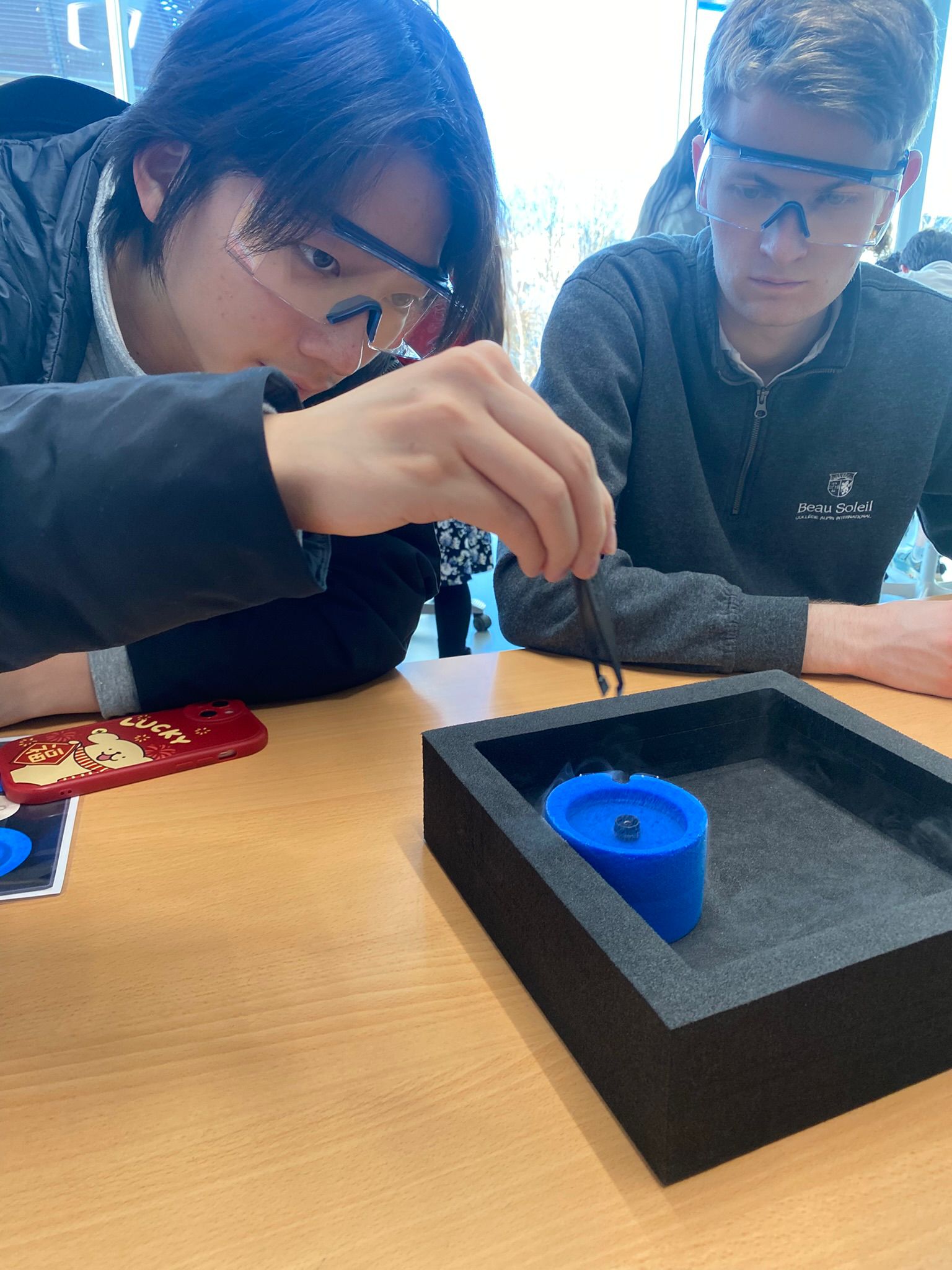
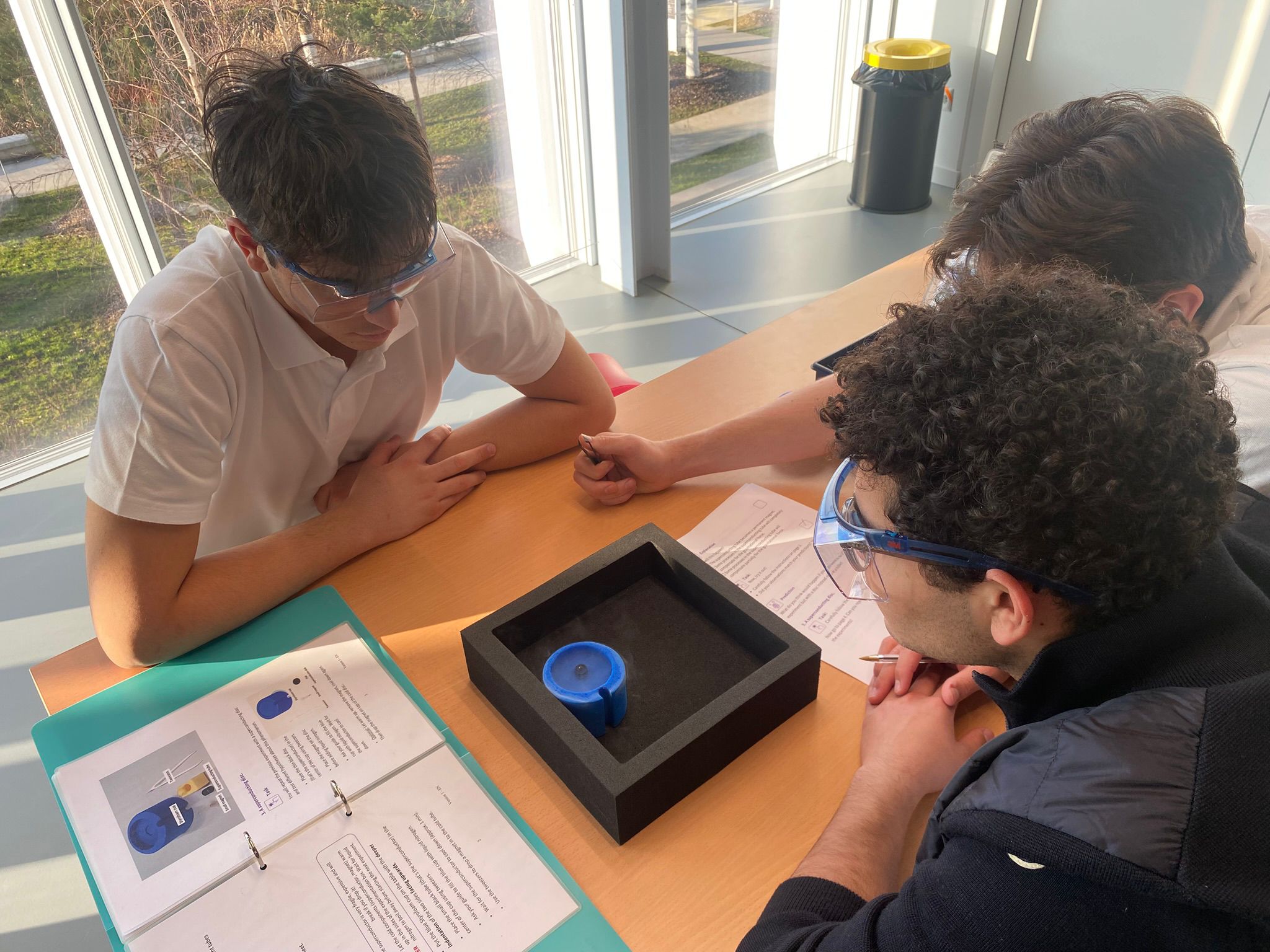
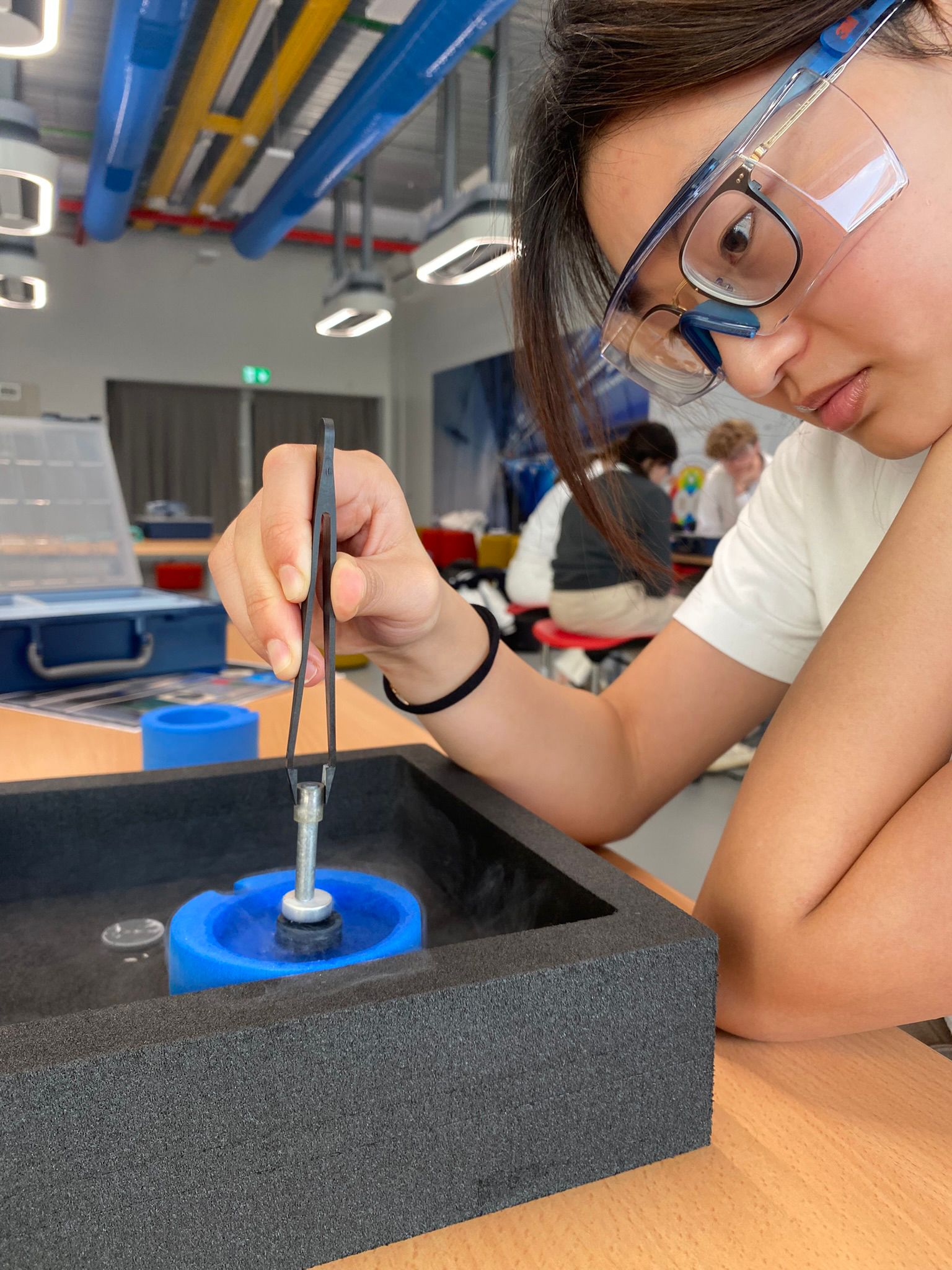
One of the standout moments of the day was a practical workshop on superconductivity. Students created their own floating superconducting magnets using liquid nitrogen, guided by CERN researchers.
This hands-on activity demonstrated how superconductors eliminate electrical resistance and enable magnetic levitation. Students also learned how advancements in superconducting magnet technology impact everyday life, from medical imaging systems to high-speed transportation.
Experiences like this help students see how scientific research translates into real-world innovation.
Meeting CERN Scientists and Engineers
The group was guided by two CERN specialists. The first was an electrical engineer responsible for maintaining the complex electrical supply systems that power the accelerator. The second was a researcher currently investigating neutrinos using the accelerator.
Hearing directly from professionals working at CERN gave students valuable insight into career pathways in physics, engineering and scientific research.
Why Real-World Science Experiences Matter?
Educational visits like this bring classroom learning to life. Students gain a deeper understanding of how physics principles are applied in advanced research facilities and how technological developments influence society.
By linking IB HL Physics theory with global scientific innovation, the visit encouraged curiosity, critical thinking and international awareness.
Discover More Through the IB Diploma Programme at Beau Soleil
Experiences like our visit to CERN reflect the core values of the IB Diploma Programme. The IB encourages students to think critically, explore global perspectives and apply their learning beyond the classroom.
Through Higher Level subjects such as Physics, students develop analytical skills, research capabilities and a strong understanding of the scientific world. These foundations open pathways to leading universities, research institutions and careers at the forefront of innovation.
To learn more about how our IB curriculum combines academic excellence with real-world learning, we invite you to explore our IB programme here in more detail.
Discover more

Grade 11 Take on Their First Alpine Expedition of the Year
Grade 11 students head into the Swiss Alps for a two-day Outdoor Education expedition, taking on hiking, climbing, glaciers and new challenges.

The Beau Soleil Podcast – Episode 4: Bridging Generations Through Service
Discover how Beau Soleil students connect with older generations at Les Gentianes in Episode 4 of our podcast, exploring service, empathy and community.

Beau Soleil Golfers Tee Off the New Season
Beau Soleil golfers begin the season at Sion Golf Club, with students gaining valuable competition experience and celebrating a standout win.

A Warm Welcome to Our New Students at Beau Soleil
Welcome to Beau Soleil and discover how we welcomed our new students and families to Villars for two sunny days of introductions, activities and new beginnings.

IB Success for Class of 2026
The Class of 2026 at Beau Soleil International School has once again demonstrated exceptional achievement in the International Baccalaureate (IB) Diploma Programme. With an average score of 35 points and a highest score of 45/45, our graduates continue to perform well above the global average. Their success reflects not only academic excellence, but also perseverance, ambition, and a truly global outlook. Graduates have received offers from leading universities including New York University, Vanderbilt University, the London School of Economics and Political Science, Imperial College London, UCLA, USC, and many more around the world.

Celebrating Outstanding LAMDA Results at Beau Soleil
Our students have plenty to celebrate following another fantastic set of LAMDA exam results, with students across Grades 8, 9 and 10 demonstrating creativity, courage and strong communication skills in their performances.

Challenge #2: The Obstacle Course
The Beau Soleil Challenge Series continued this weekend with the Obstacle Course, the second of seven Challenges our students will take on throughout the year.

From Train to Télécabine: The First Challenge of the Year
Discover the Beau Soleil Challenge Series, a tradition spanning more than 35 years that encourages students to step outside their comfort zones, challenge themselves and achieve something together.

Beau Soleil Welcomes 95 University Representatives from Around the World
Beau Soleil welcomed 95 university representatives for its annual University Fair, helping students explore global study opportunities and future pathways.

Exeat Adventures: Surfing in San Sebastián
Discover how Beau Soleil students spent Exeat weekend in San Sebastián, combining surfing, local culture, city exploration and time with friends.

Admissions
We’re delighted that you’re interested in joining the Beau Soleil family. Your journey starts with our expert Admissions Team, who will guide you through the process – from helping you submit your application form to arranging a guided tour.
Our school – which is home to around 300 students – is small but diverse. This means places are limited, and we’d encourage you to apply as soon as possible to avoid disappointment.